What to Do With the Ten Seconds the Agent Gives You
The agent takes ten seconds, and ten seconds is exactly long enough to pick up your phone and lose four minutes.
Where the time actually goes
Short waits are the most dangerous kind. They are too brief to start anything and too long to sit still, so they get filled with whatever is nearest, and what is nearest is usually a device engineered to keep you. The waiting is not the problem; the filling is.
How the Keycap Fidget changes it
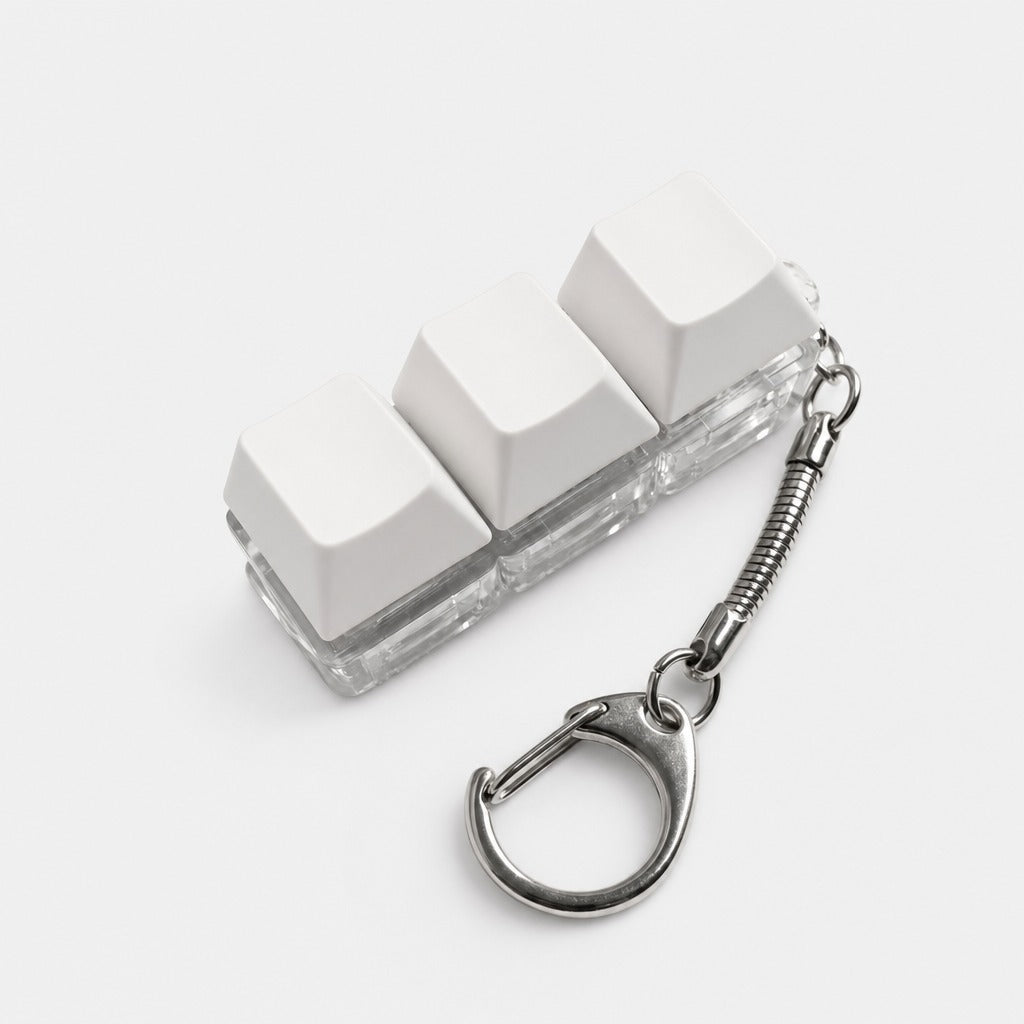
The Keycap Fidget gives your hands something with a real tactile bump that cannot pull you anywhere. Three genuine mechanical switches under blank keycaps, on a clear base so you can watch the mechanism, on a steel chain.
Where it sits in a real workflow
It sits next to the keyboard and you press it while you read the agent's output. That is the actual use: not idle fidgeting but occupying your hands during the ten seconds when your eyes are busy and your hands are not, so that the ten seconds stays ten seconds. It clips to a bag, which is where it goes when you leave.
Doing the arithmetic yourself
Count how many short waits you have in a day, then ask what fraction of them currently end with your phone in your hand. That fraction is the thing this nineteen-dollar object is competing for.
Who gains most from the Keycap Fidget?
Anyone who has noticed the short-wait-to-phone pipeline in themselves. Also good as a gift for someone who types for a living.
The first twenty minutes
None. Press it.
Related
Keycap Fidget, $19, full specification, frequently asked questions and what to know before buying. Or look at the Pixel Charm, which solves a neighbouring problem.
futuredevice sells AI hardware for everyday life. Type less. Ship more.