When Three Pedals Is Not Enough
You have accept, reject and push-to-talk on three pedals, and you keep reaching for the keyboard to run the tests.
Where the time actually goes
Every workflow has one action more than the hardware you bought for it. For most people reviewing agent output that fourth action is run-tests or jump-to-next-diff, frequent enough to matter, and annoying precisely because everything else is already hands-free.
How the Pedal Four changes it
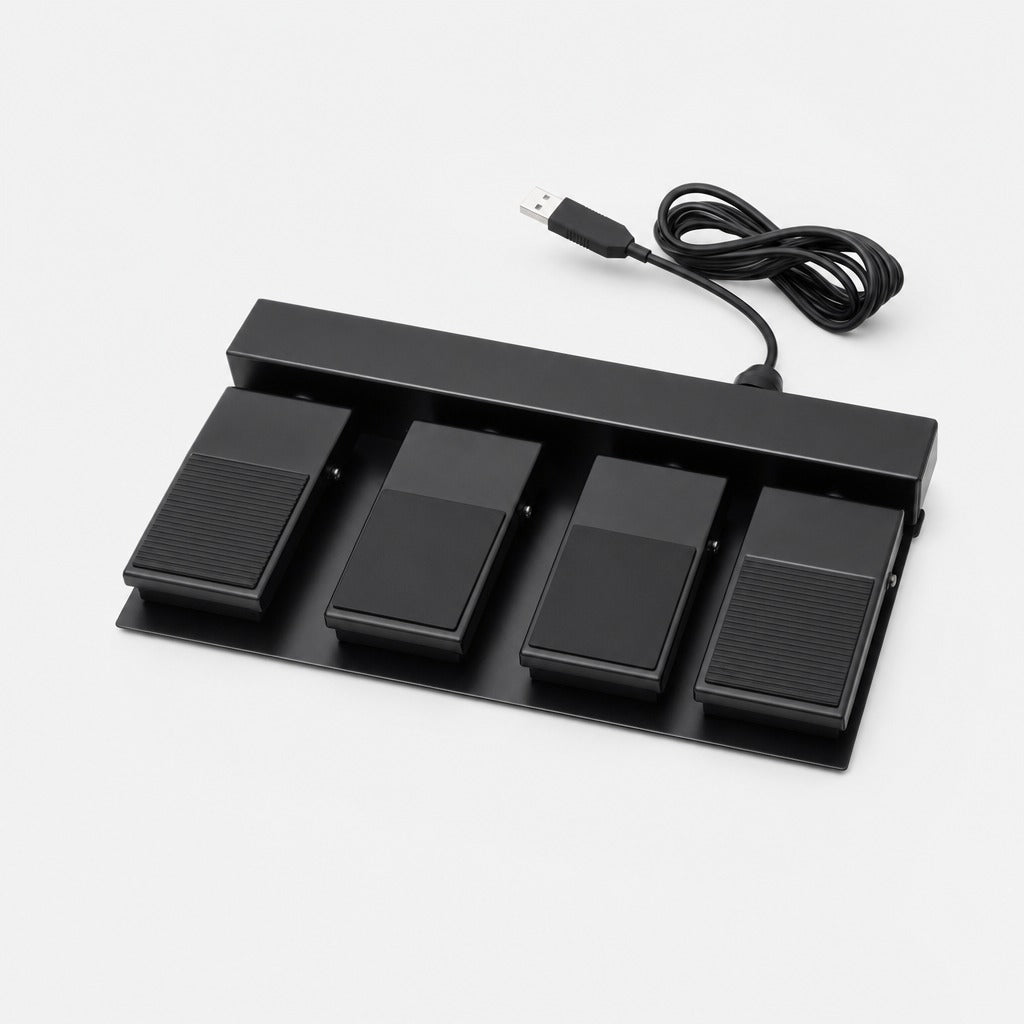
Pedal Four is the same idea with one more pedal and the driver built into the device, so it is plug and play in the strict sense: nothing is installed on the host at all. The plate is lower and longer than the three-pedal unit, which means you can rest a foot between two pedals without triggering either.
Where it sits in a real workflow
Accept, reject, talk, and then the fourth for whatever your loop actually needs, running the suite, advancing to the next hunk, switching model. The other reason people buy four is streaming: scene switch, mute and record is exactly three, plus one spare, and none of them should cost you the keyboard in the middle of a take. If you both code and stream, this is the one pedal that covers both jobs without remapping between them.
Doing the arithmetic yourself
The honest test for the fourth pedal is whether you can name the action right now. If you can, it will pay for itself in a week. If you cannot, buy three and save the difference.
Who gains most from the Pedal Four?
People with a named fourth action, and streamers. If accept, reject and talk is genuinely your whole loop, Pedal Three is the better purchase in a smaller footprint.
The first twenty minutes
Plug in, map four keys, done, there is no software to install because the driver lives on the device.
Related
Pedal Four, $85, full specification, frequently asked questions and what to know before buying. Or read about the Pedal Three, which solves a neighbouring problem.
futuredevice sells AI hardware for everyday life. Type less. Ship more.